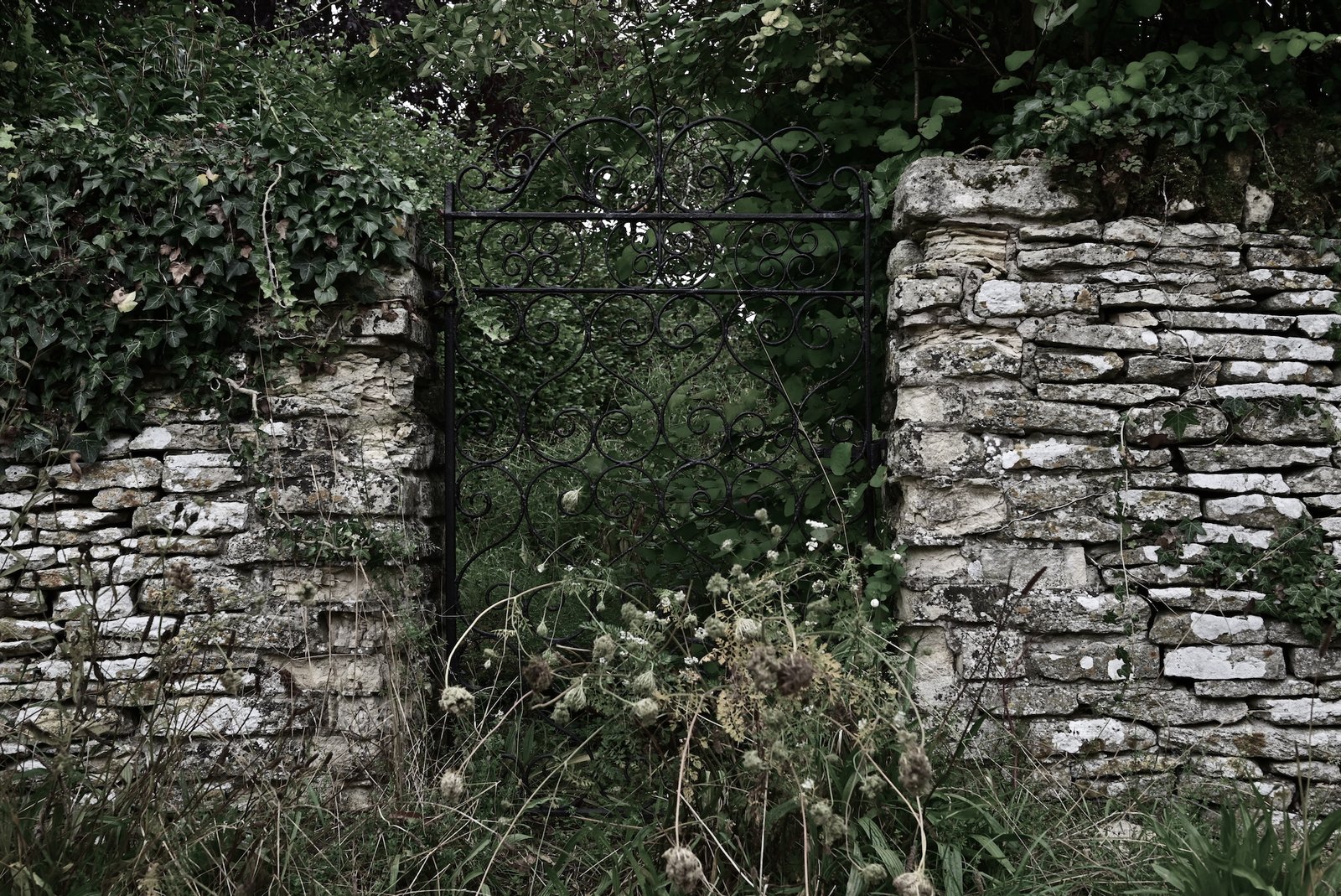
Growing Straight Out of Rock
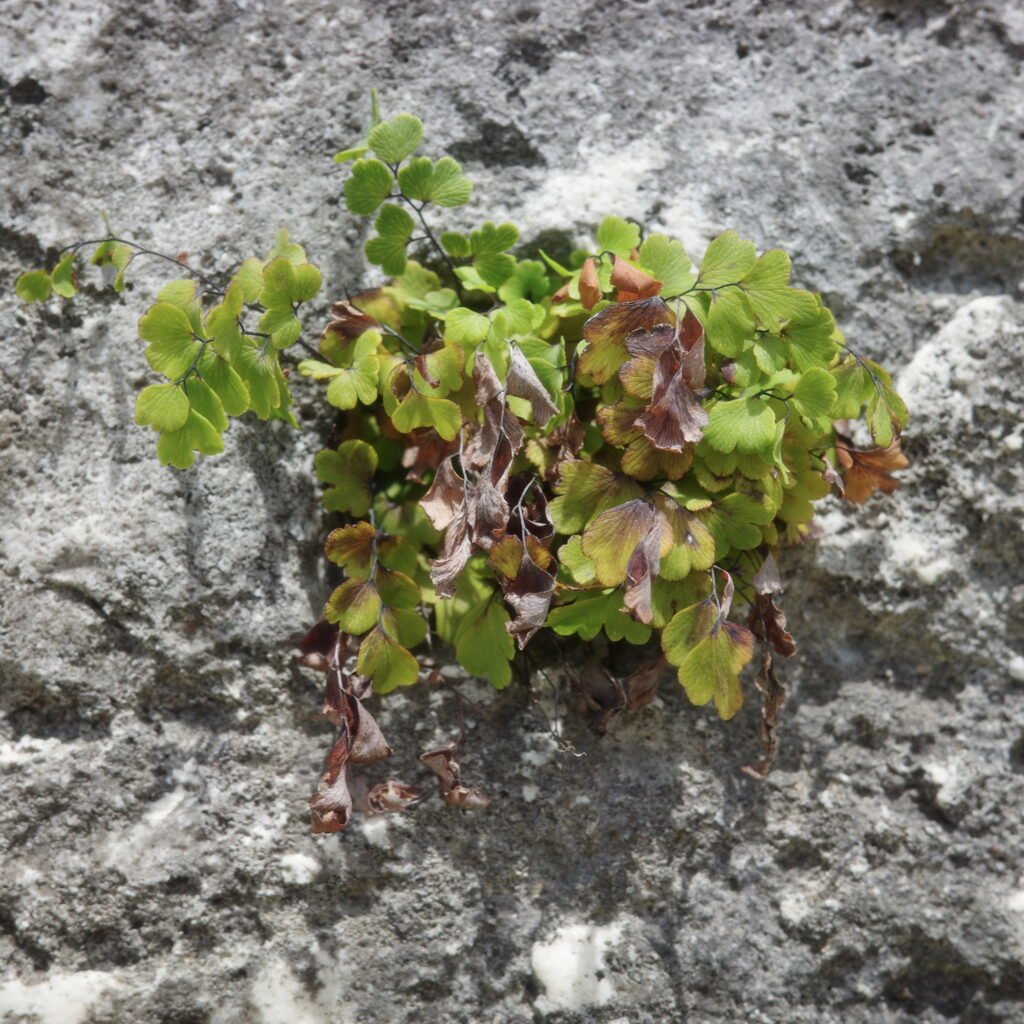
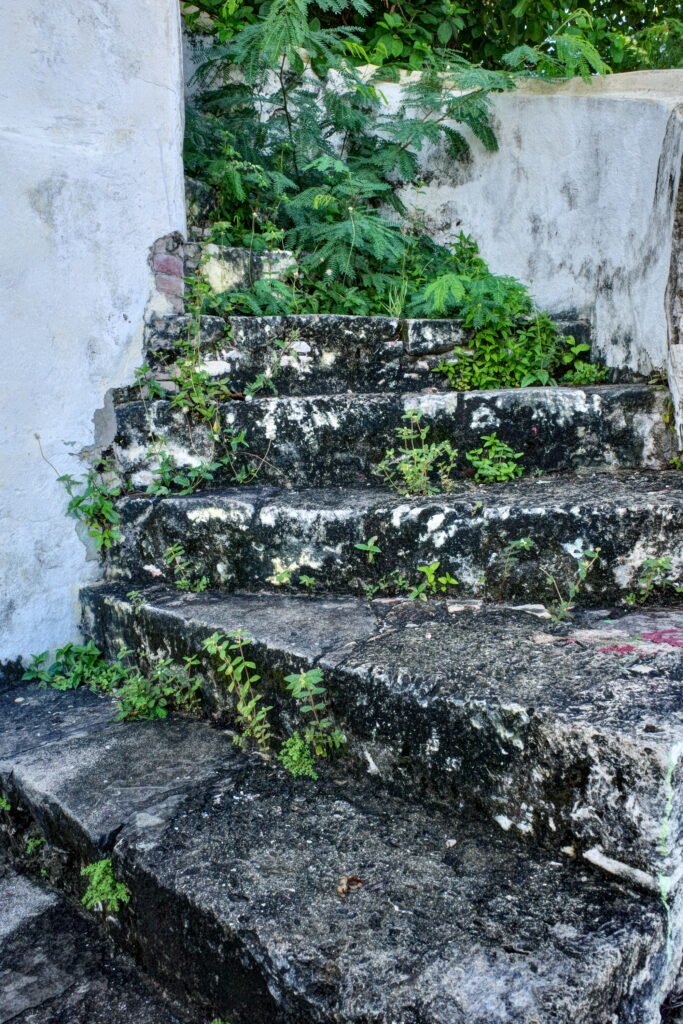
Deeply immersed in the world of reclaimed by nature photography, I have observed that nature always finds a way. On a recent trip to Bermuda I was exploring King’s Wharf and the Royal Naval Dockyard when I noticed a number of examples of plants growing straight out of vertical rock and coral walls, and it got me thinking. It seems this should be impossible without soil or special nutrient enriched water like the water typically used in hydroponic gardening. How is it these plants are able to grow right out of the rock?
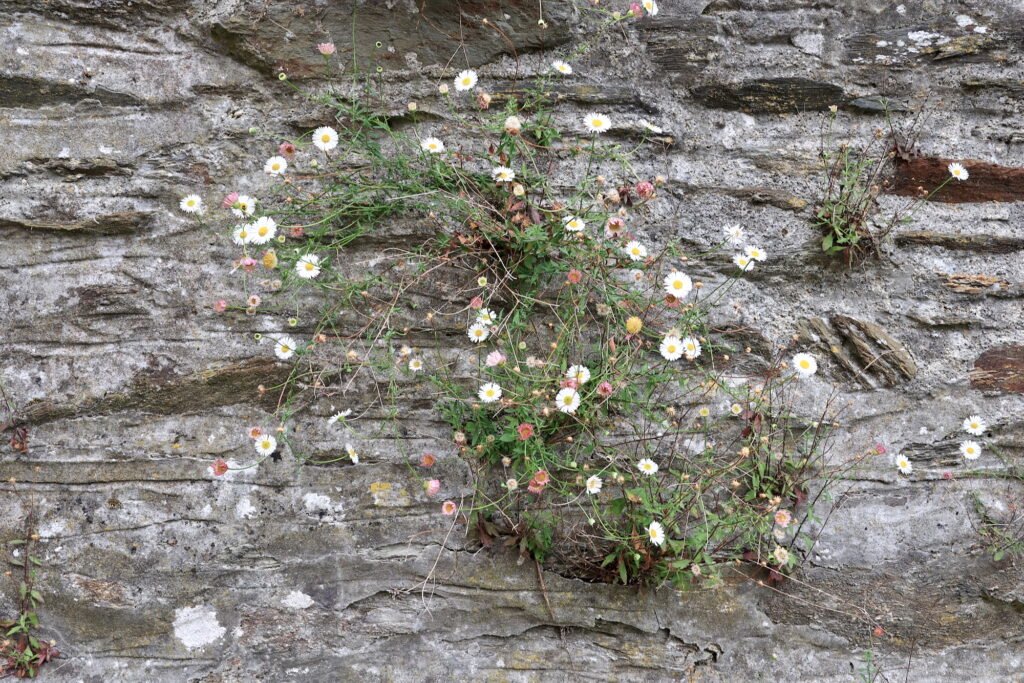
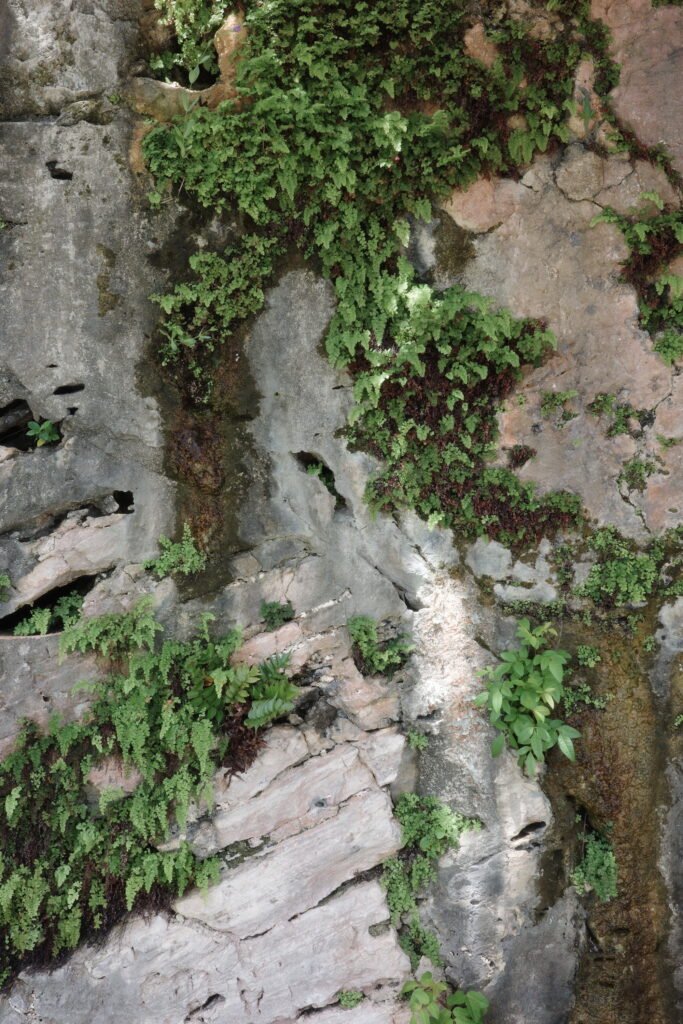
The answer is rather amazing. A wayward seed on the breeze can settle in the tiniest crack and begin to grow with roots wedged into micro-cracks. Rainwater and seeping moisture can carry dissolved minerals and organic dust to the roots. Over long periods of time roots and plant acids can slowly break down rock into tiny dust particles, creating their own tiny pockets of primitive soil. It seems that life finds a way, given the slightest chance.
When we are out and about and being mindful, examples of nature getting a foothold and finding a way can be seen everywhere. The human world is built on rigid lines to create and enforce order, but this is marked by impermanence. Nature, on the other hand, operates with a patient, persistent fluid movement. Given the slightest chance it will consume human artifacts and reclaim the space for nature.
The Unyielding Edge: Cracks and Sidewalk Seems
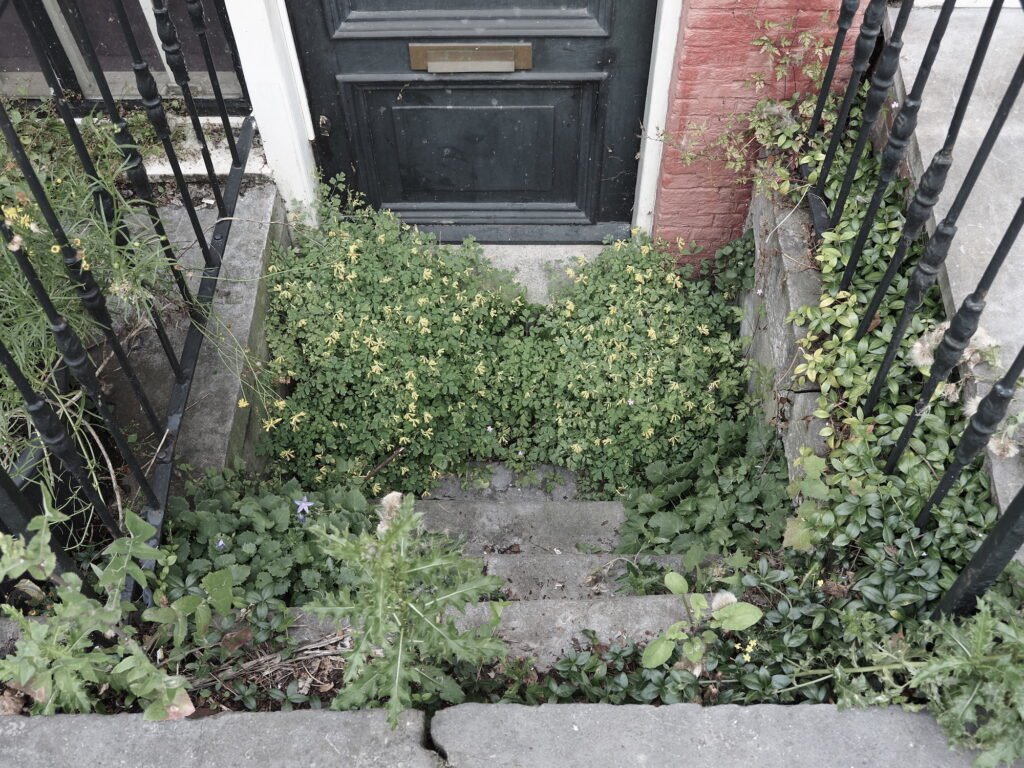
Plant life has tenacity and does not wait for a perfect environment. Xerophytes and opportunistic weeds exploit the microscopic fault lines in human engineering. A buckled sidewalk isn’t just a structural failure of the human world. It is a canvas where flora takes root at any opportunity.
This canvas can by used for mindful minimalist photography as a visual language. Focus on isolation. Forget the hectic or chaotic street scene, and use the feet to zoom in. Observe the graphic contrast between geometric human artifice and soulless concrete with the organic, chaotic curves of an emerging root.
The Singularity of Living Walls
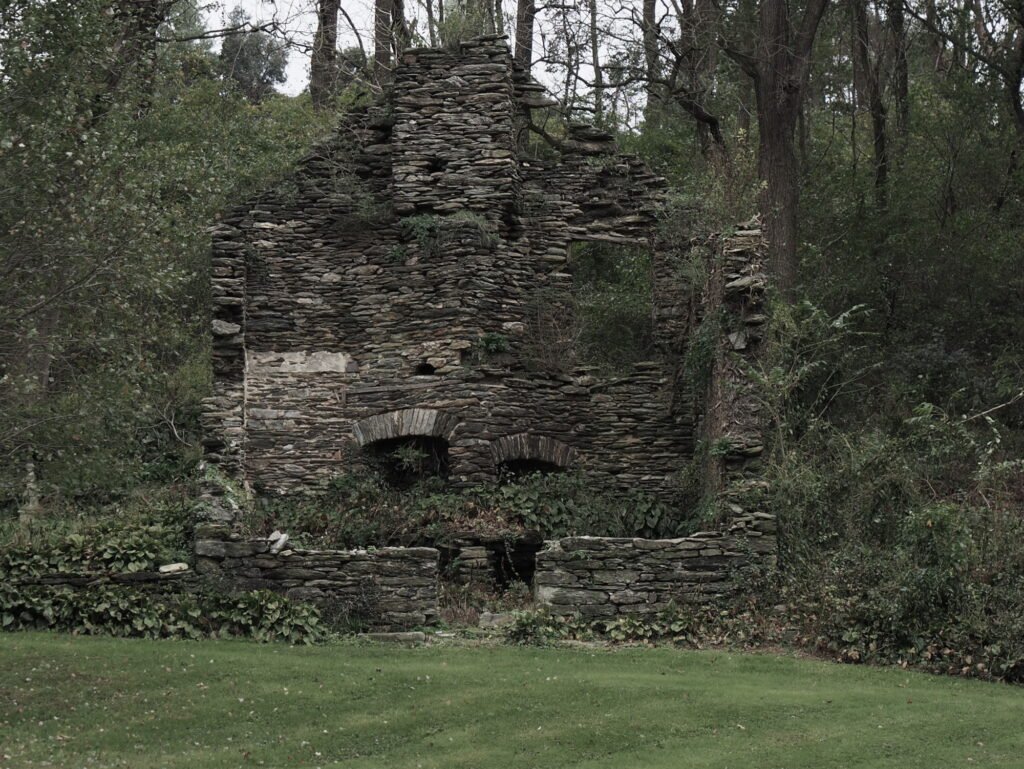
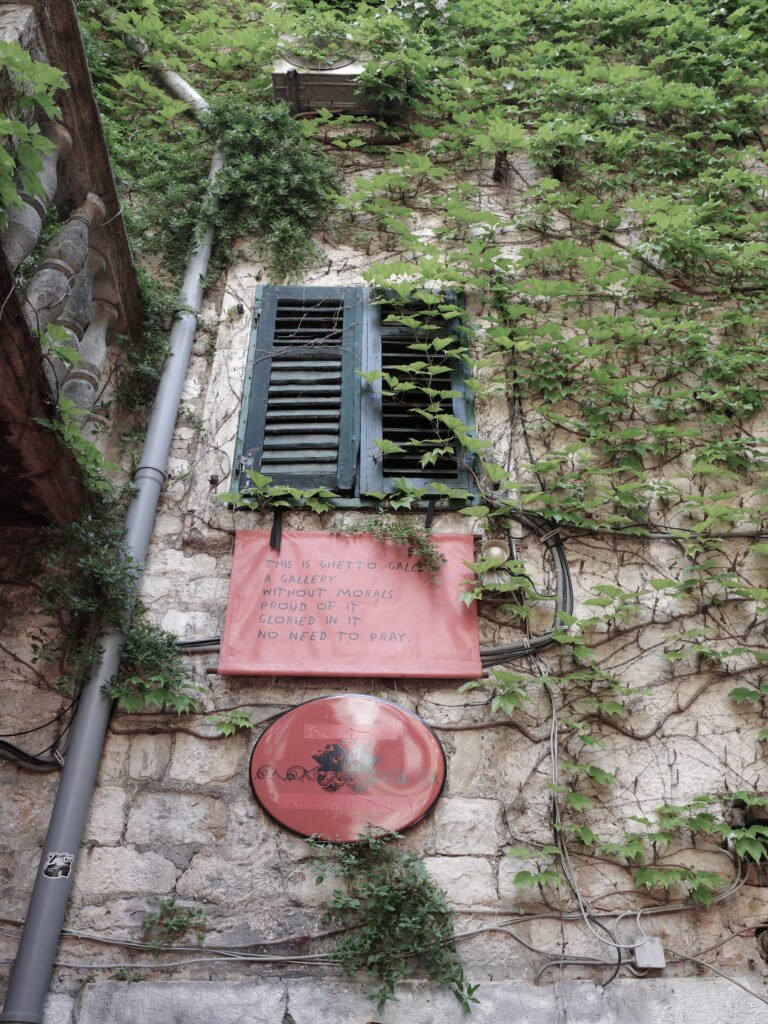
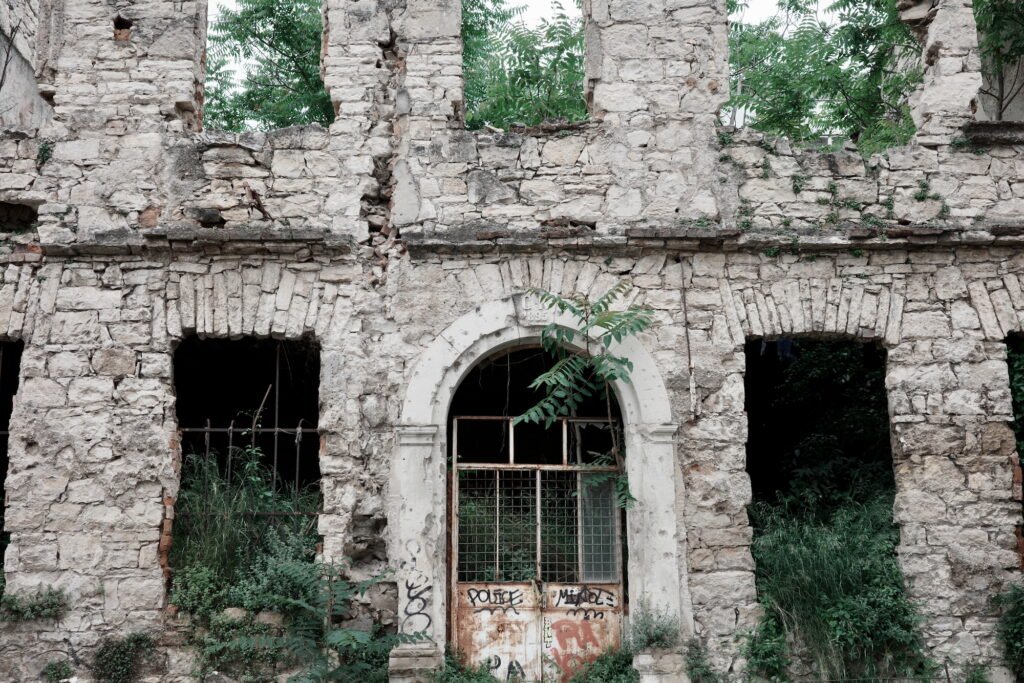
Why are ancient stone wall structures a favorite canvas for nature to digest? Unlike smooth, modern poured concrete, old dry-stone walls—rich with historic masonry fissures, mortar decay, and porous pockets—act as ready-made vertical ecosystems. They trap pockets of wind-blown soil, humidity, and spores. Over time, moss scales the stone faces, vines thread deep into the joints, and small ferns anchor themselves directly into the structural cracks. What humans built to serve as an unyielding boundary slowly transforms into a living, breathing tapestry where the boundary between architecture and environment completely dissolves. This convergence of human artifice and nature’s tenacity melds the artificial and the organic. You can no longer separate the two. If you pull the plant out, the wall might collapse. If you tear down the wall, the plant dies. The human artifact has become an ecosystem. The natural organism has become a piece of architecture. The German philosopher Georg Simmel may have expressed it best. He wrote extensively about ruins, noting that they represent a tragic yet beautiful peace treaty between human will and nature.
Re-calibrating the Mindful Lens
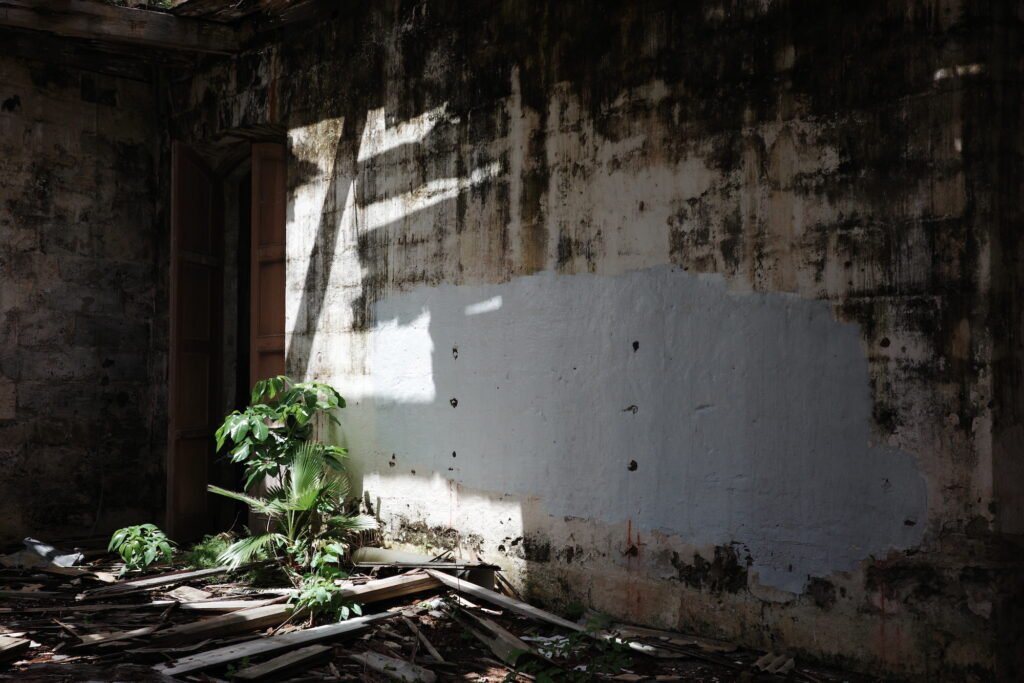
Connect the physical act of finding these objects of singularity with the internal practice of mindfulness. Photographing a tiny plant flourishing inside a crumbling brick wall requires an intentional slowing down. It requires removing the mental clutter of wide-angle options or heavy equipment bags, and committing entirely to a single fixed field of view. This style of slow, observant documentary street travel is enabled entirely by minimizing your physical footprint.
The Quiet Triumph
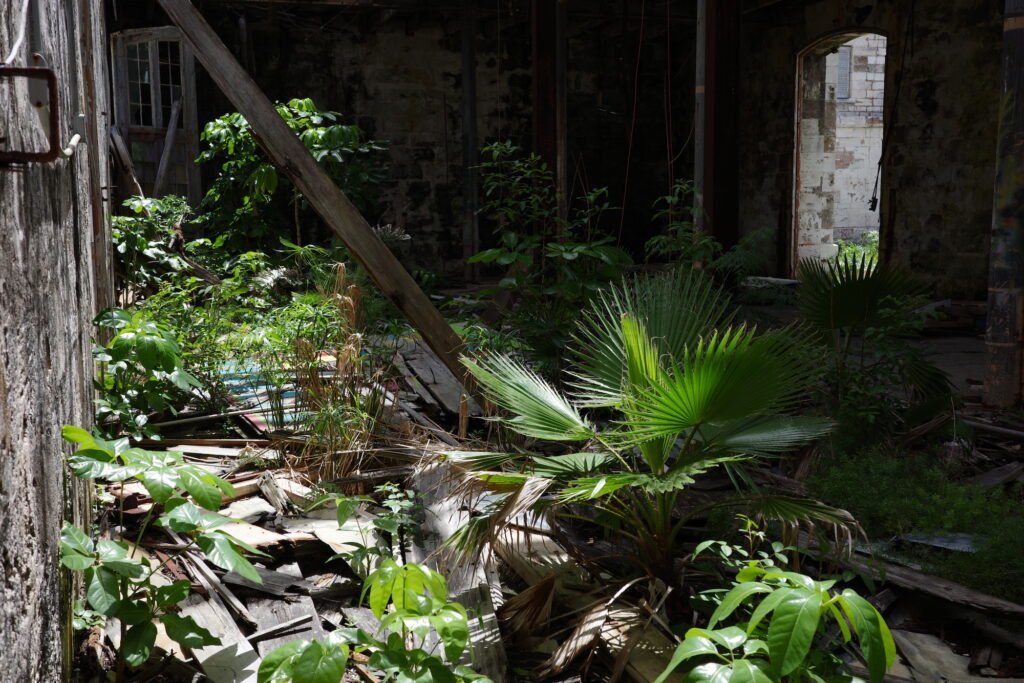
There is a weighty inevitability of nature’s return to the spaces from which it has been displaced. Exploring and experiencing these spaces with a mindful lens and minimalist camera can bring witness to this quiet, beautiful reconciliation between human artifice and the earth.
To explore the minimalist tools, specialized camera settings, and creative resources used to cultivate this style of slow, presence-based observation, explore the Curated Resource Collective.
Recommended Reading: Islands of Abandonment: Nature Rebounding in the Post-Human Landscape by Cal Flyn. If you wish to look deeper into the poetry of the quiet takeover, this book is an extraordinary companion to your creative practice. Flyn explores forgotten, desolate landscapes across the globe—from abandoned industrial hubs to uninhabited buffer zones—documenting how nature swiftly and beautifully heals humanity’s scars. It is a deeply hopeful, intensely poetic masterwork that serves as the perfect literary mirror to the wabi-sabi textures and aesthetics we strive to capture through our lenses.
Shop Via: Bookshop.org | Amazon
Recommended Reading: Urban and Rural Decay Photography by J. Dennis Thomas. For photographers looking to translate the philosophy of the quiet takeover into actionable camera techniques, this book is an invaluable addition to your library. Thomas moves past pure theory to explore the actual mechanics of capturing texture, managing tricky high-contrast light in abandoned spaces, and composing images that tell a profound story of passage and time. It is an excellent, practical companion piece for any creator looking to take their camera out into the field and master the art of documenting nature’s beautiful, slow reclamation of the built world.
Shop Via: Amazon
Leave a Reply