
A Mindful Photographic Study of the Abandoned Union Church in Northeast PA
We often treat old buildings as monuments to what once was, viewing their decay through a heavy lens of Western nostalgia—a bittersweet longing to freeze time or mourn what has been lost to history. But if we shift our focus, stepping past the urge to cling to the past, the abandoned Union Church of Lathrop Township, Pennsylvania, reveals a different kind of quiet wisdom. Captured beneath the heavy, diffused light of an overcast sky, its weathered wood and quiet desolation carry an undeniably eerie, spooky atmosphere. Yet, beneath this initial chill lies a living canvas for Wabi-Sabi, the traditional Japanese aesthetic that finds profound beauty in imperfection, humility, and the inevitable transience of all things.
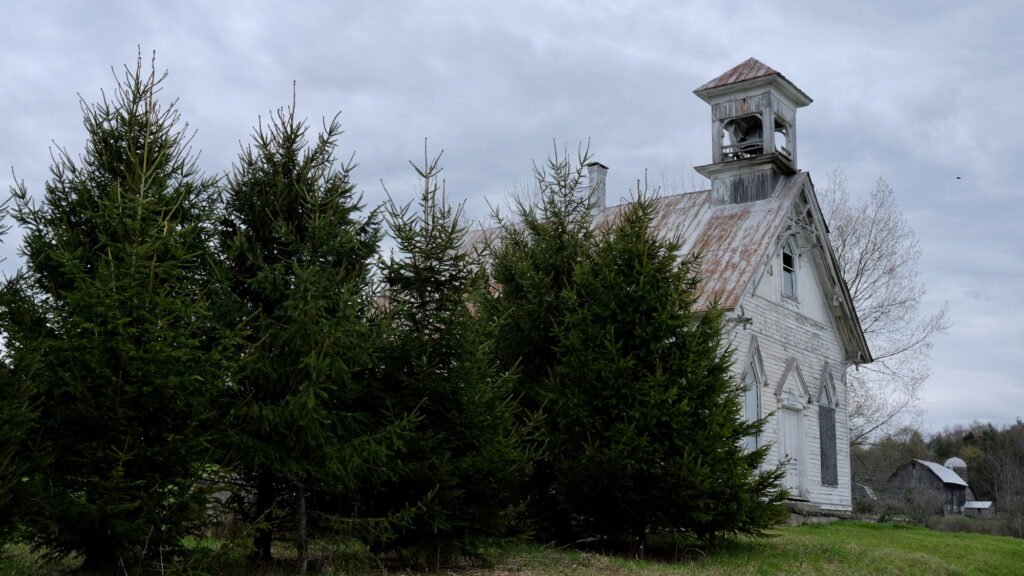
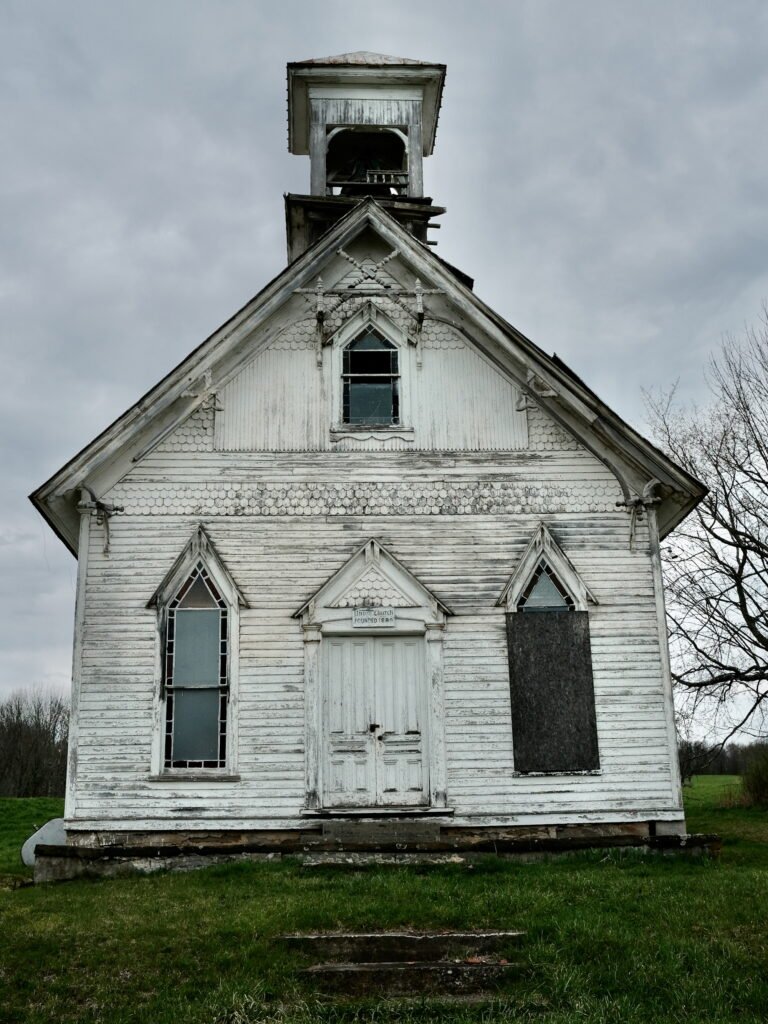
Built from modest wood rather than grand stone, this rural house of worship was always defined by its simplicity. Today, nature is etching the patina of time into its peeling paint and boarded windows. The gloomy, shadowed mood of these photographs serves as a visual bridge between two worlds: the haunting mystery of a Western ruin and the meditative stillness of sabi—the beauty that only comes with age, wear, and solitary isolation.
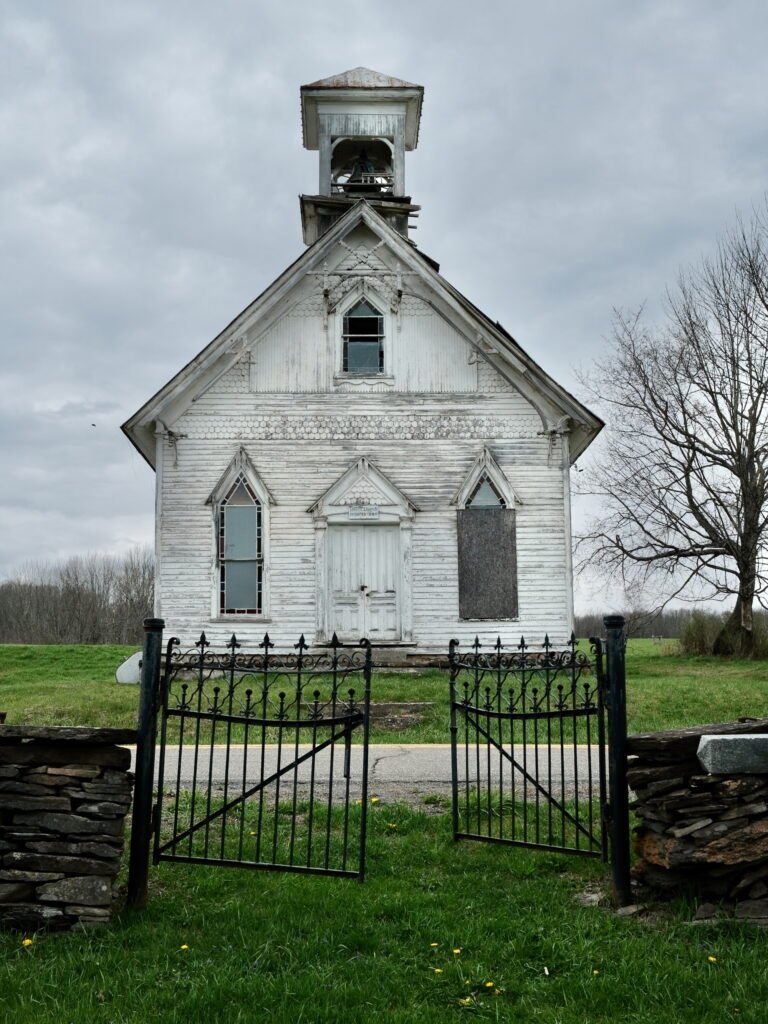
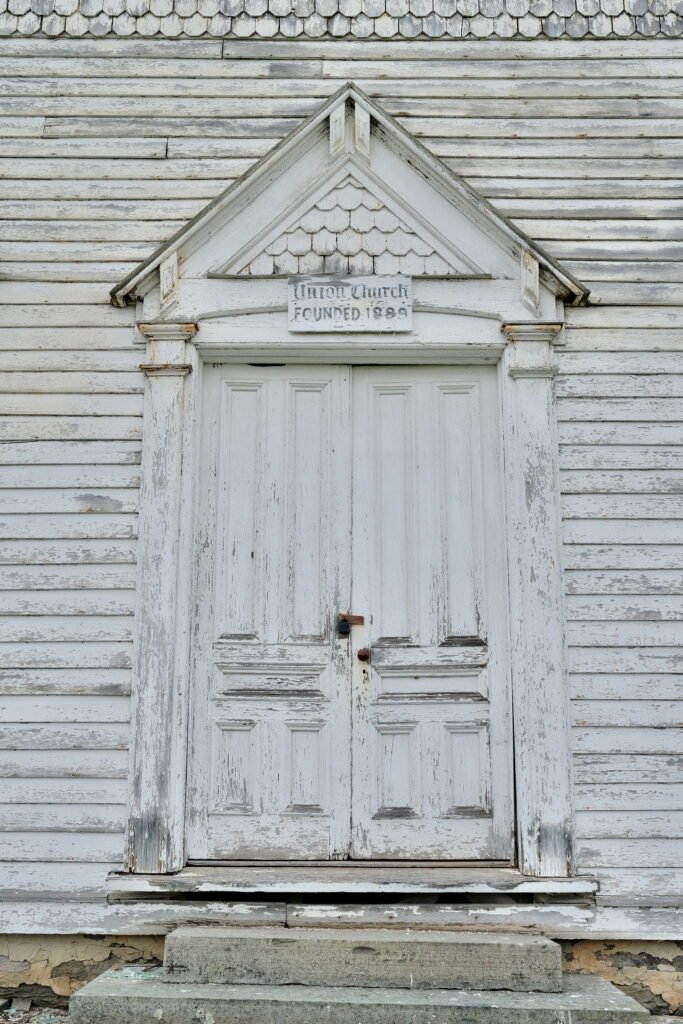
Through the following visual movements of wabi-sabi photography, The Mindful Lens Gallery explores this intersection. Beginning at the threshold, the view consists of a partly opened wrought iron cemetery gate and an old stone wall, where the boundary between the living, the dead, and the enduring earth is blurred. Moving closer, our lens lingers on the intimate fractures of the front entrance and the barricaded glass, tracing the elegant, honest decay of an American landmark quietly surrendering to the natural cycle of time.
Impermanence (Mujo)
The skeletal frame of the Union Church stands as a stark visual sermon on mujo—the Buddhist concept of universal impermanence. Captured beneath a somber sky, the structure is not a static object but a process of slow, inevitable dissolution. The rooflines sag, foundations shift, and the surrounding wilderness gradually encroaches upon the perimeter. This eerie atmosphere reminds the viewer that even our most sacred spaces cannot resist the flow of time, offering a profound space to contemplate the transience of our own lives.
Simplicity & Humility (Wabi)
Stripped of the ornate stonework and grand proportions of urban cathedrals, the building is a pure expression of wabi—the beauty found in unpretentious, rustic simplicity. Constructed from basic local timber to serve a modest, rural community, its architectural honesty shines through its decay. The boarded-up windows and plain front entrance do not hide behind ostentatious decoration. Instead, the photograph reveals the quiet dignity of a structure that was built from the earth and is humbly returning to it.
The Patina of Time (Sabi)
Every scar on the facade of the church tells a story, embodying sabi, theaesthetic appreciation of the physical marks left by aging. The deeply weathered wood grain, the flaking layers of paint, and the lichen creeping across the old stone wall are not defects to be repaired, but a prized patina earned over lifetimes. The partly opened wrought iron cemetery gate in the foreground acts as a literal and figurative threshold, framing the physical texture of history and highlighting the elegant vulnerability of things left to the elements.
The Western Departure from Tradition
While the church perfectly mirrors the visual criteria of the aesthetic, it achieves a state of Wabi-Sabi that fundamentally departs from the traditional Japanese concept through its accidental nature and emotional weight. True Japanese Wabi-Sabi is often a deliberate, cultivated design choice, such as the intentional repair of a cracked tea bowl. The Union Church, by contrast, achieved this state through human abandonment and systemic neglect. Accidental wabi-sabi. Furthermore, the spooky, haunting atmosphere captured in these images evokes a uniquely Western gothic melancholy and local nostalgia, replacing the serene, detached acceptance of Eastern philosophy with a poignant, ghostly echo of a forgotten community.
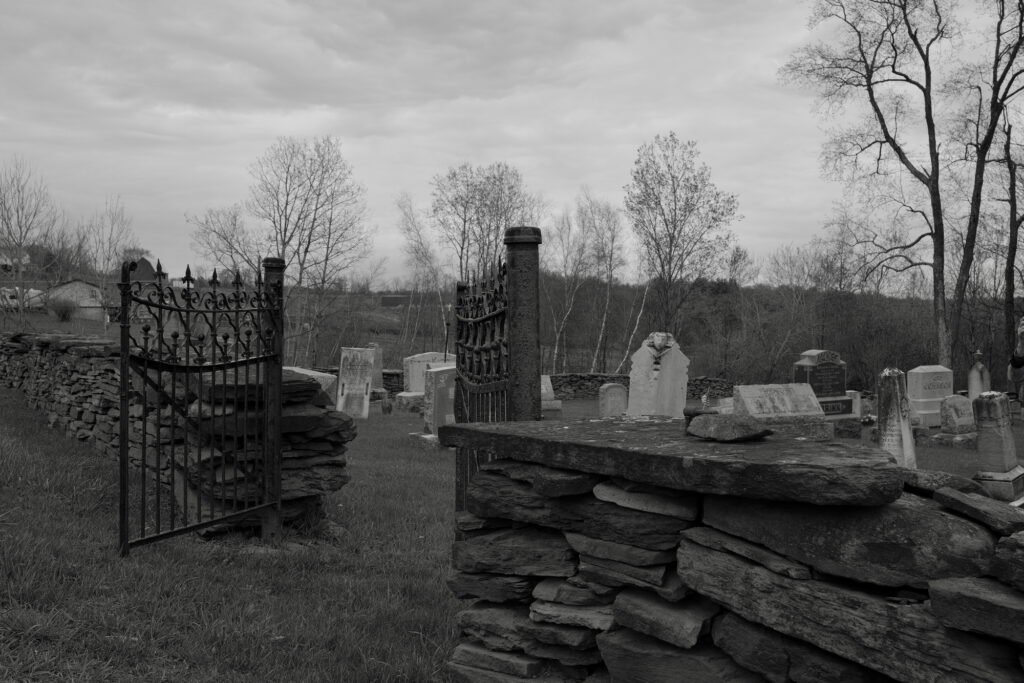
In the quiet, heavy stillness of Lathrop Township, the Union Church ultimately stands as a profound physical meditation on the three core realities of existence that anchor the Wabi-Sabi philosophy: nothing lasts, nothing is finished, and nothing is perfect. It does not demand our pity for its abandonment, nor does it ask to be restored to a pristine past. Instead, shrouded in the mood of an overcast afternoon, its sagging roof, raw timber, and rusted iron gate invite us to confront our own fragility. By leaning into the haunted beauty of its frame, the mindful lens reminds us that true peace comes not from resisting the inevitable march of time, but from finding a quiet, resonant wonder within it.
Bringing the Practice Home
If you want to explore these concepts deeper or carry a camera on your next slow walk, I have compiled my favorite tools for intentional photography and mindful living. Visit The Curated Resource Collective to discover the reflective books and compact cameras—like the minimalist Ricoh system that I use to support my practice.
Recommended Reading
The Mindful Photographer by David Ulrich
- What it is: Featuring 55 short essays, this text offers a beautiful framework for cultivating presence and deep awareness behind the lens, treating the camera as a tool for active visual meditation.
- Where to Find It: Available at Bookshop.org (supports independent bookstores) and Amazon.
Leave a Reply