In an age dominated by endless visual noise, hyper-saturated digital feeds, and rapid-fire content consumption, our relationship with the world has become fragmented. We look, but we rarely see. Or, as Sherlock Holmes once said to Dr. Watson, “You see, but you do not observe.” For photographers seeking to reclaim a sense of deep presence, mindful minimalism offers a profound creative shift.
Mindful minimalism is more than a strict design aesthetic; it is a mindset and a meditative practice. It combines the psychological discipline of mindfulness—being intentionally present in the current moment without judgment—with the intentional simplicity of minimalism. Instead of treating photography as an act of design and excessive planning, this philosophy views the camera as a tool for heightened awareness. It invites the photographer to slow down, quiet the internal dialogue, and look at the world with patient reverence, paring away distractions to focus purely on the essence of a single moment.
The Concept of Minimalism in Photography
When translated directly into the frame, minimalism manifests as a deliberate restraint. It is the art of exclusion, operating on the principle that what you leave out of the frame dictates the power of what remains. Traditional photography often seeks out the complex or dramatic, but a minimalist composition thrives on negative space, clean geometric lines, sparse color palettes, and single isolated subjects.

By eliminating visual clutter, the minimalist photographer can create a sense of profound stillness. The negative space is not merely empty; it acts as breathing room for the viewer’s eye, a concept closely tied to the Japanese aesthetic of Ma (the beauty of the space between things). Through this intentional isolation, ordinary elements—a lone leaf on still water, a solitary shadow cast on concrete, or the sweeping horizon of an empty coast—are elevated from the mundane into objects of singular, poetic beauty.
Applying the Concepts: Core Subjects of the Practice
Practicing mindful minimalism requires anchoring your awareness to specific thematic subjects that naturally embody stillness, transition, and quiet beauty.

1. Forest Bathing (Shinrin-Yoku)
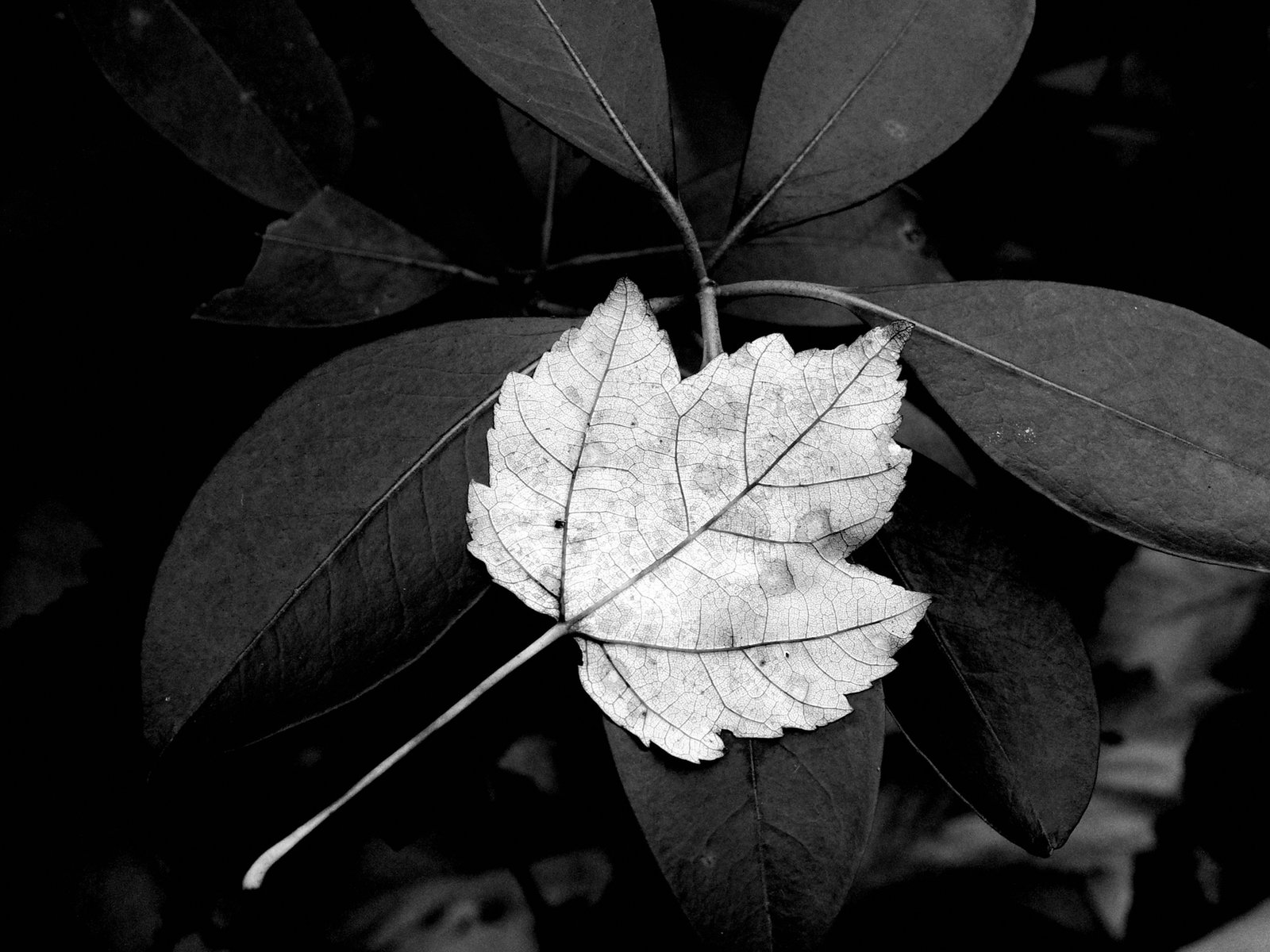
Inspired by the Japanese practice of immersing oneself deeply in nature, photographic forest bathing requires leaving behind rigid expectations of chasing a grand landscape. Instead, move slowly through the trees, engaging your senses completely. See and observe. A mindful minimalist approach focuses on the small, quiet details of the ecosystem. Observe the geometric symmetry of a single fern or tree leaf, or the subtle texture of damp moss hugging a root, or perhaps the way fractured morning light breaks across a patch of forest floor. The goal is to distill the overwhelming tapestry of a forest into micro-compositions of peacefulness.
2. Wabi-Sabi and Urban/Rural Decay
Wabi-sabi is the ancient Japanese aesthetic centered on finding beauty in imperfection, impermanence, and the natural cycle of growth and decay. When applied to photography, it aligns perfectly with both rural and urban decay.
Rather than viewing a peeling layer of paint on an abandoned farmhouse, a cracked concrete wall in a city alley, or a rusted hinge as signs of neglect, the mindful photographer honors them as chroniclers of time. These weathered surfaces offer rich, abstract textures. By focusing tightly on these details, you celebrate the transient, fragile nature of our material world. Explore more visual stories and techniques within our curated archive of wabi-sabi.

3. Mindful Travel and Street Photography
Traditional travel and street photography can easily become a frantic exercise in checking off landmarks or chasing chaotic crowds. Mindful street photography flips this dynamic entirely. It involves standing still at a chosen urban intersection or a quiet rural square, letting the rhythm of the environment wash over you.
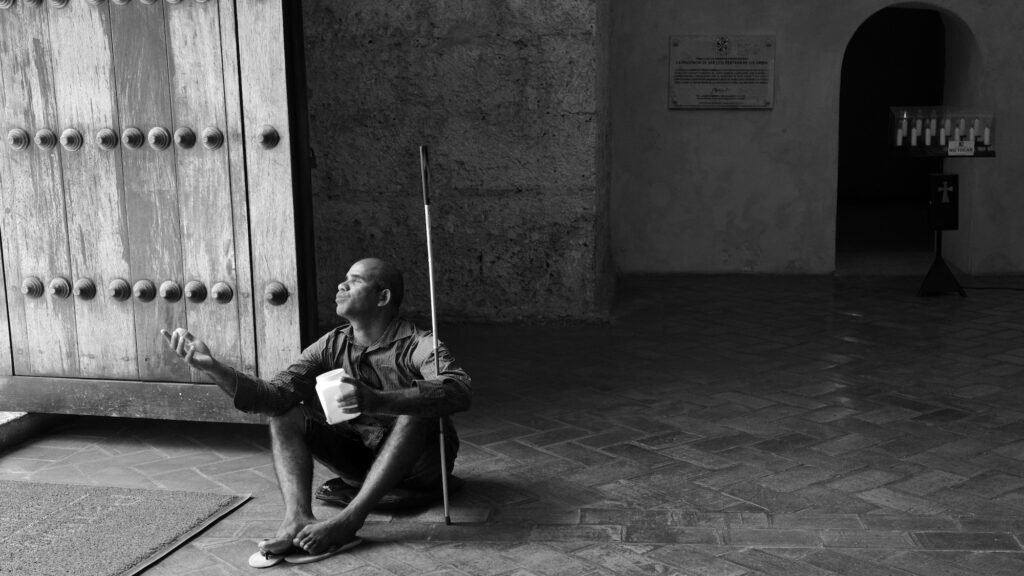
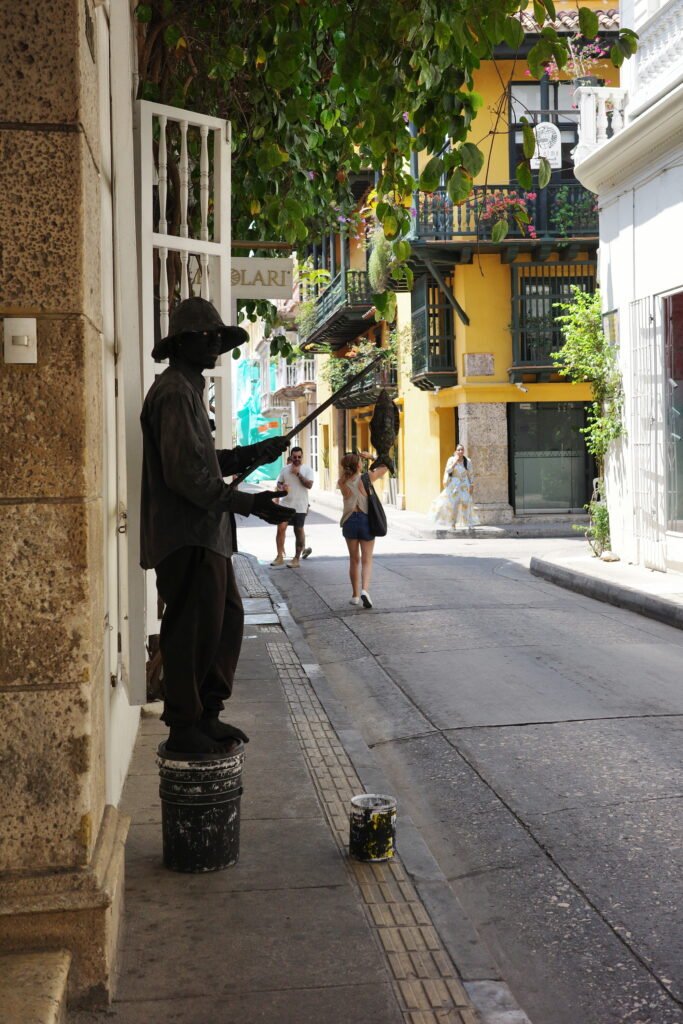
Look for isolated moments of human emotion or geometry such as a single silhouette passing through a harsh patch of light and shadow, or a forgotten coffee cup left on a train window sill, or the contrast between clean, modern architecture and a passing figure. Watch for an individual interacting in some unique way with their environment. By slowing down, you transform unpredictable environments into structured spaces of contemplation.
The Proper Approach and Recommended Gear
The psychological approach to mindful minimalism dictates the gear you carry. If your backpack is heavy with multiple zoom lenses, massive camera bodies, and tripods, your mind will naturally focus on the mechanics of photography rather than the act of observing. To truly practice mindful minimalist photography, you must restrict your tools. A fixed prime lens with a compact setup forces you to zoom with your feet and accept the creative limitations of a single field of view. This restriction eliminates the paralyzing anxiety of choice, freeing your mind to simply focus on the subject.
The Curated Kit: Two Pockets, Two Visions
To achieve this level of operational clarity, your tools must become an invisible extension of your intent. The ultimate execution of this minimalist restriction is dividing your field of view between two distinct, fixed-lens compact systems—one engineered strictly for the raw textures of passing time, and the other for the soft atmosphere of the space.
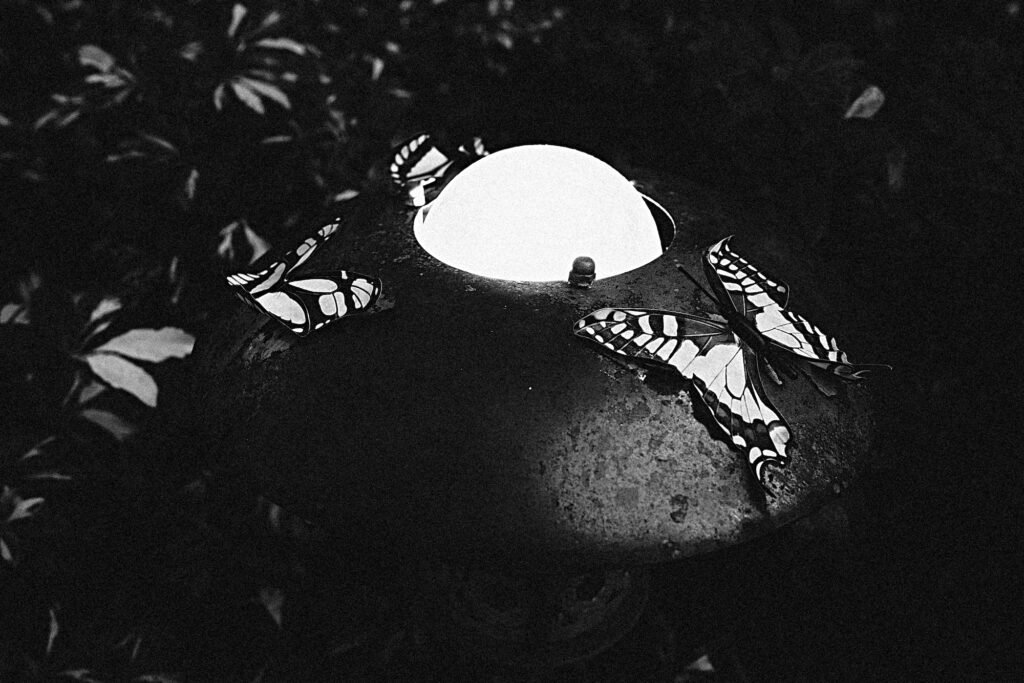
The Ricoh GR IV Monochrome (28mm Perspective): This system strips away color distractions entirely to focus purely on luminance, shadow gradation, and raw micro-contrast. Its dedicated monochrome sensor provides an immaculate, film-like grain that is ideal for capturing the harsh, weathered geometric lines of urban and rural decay.

The Ricoh GRIIIx HDF (40mm Perspective): This system provides a compressed, natural field of view that closely mirrors human observation. It features a built-in Highlight Diffusion Filter (HDF) that instantly softens bright light source reflections and damp morning mist into a beautiful, analog-like glow straight out of the camera. This body also serves as the ideal steady anchor for capturing the ambient, high-frame-rate video loops that can be used to construct moving cinemagraphs.
By assigning one camera to texture and the other to atmosphere, you eliminate field friction entirely. They share identical menus, battery lines, and zero-weight physical profiles—leaving your mind completely unburdened to simply walk, look, and respond.
Acquire the Tools
If you are ready to restrict your physical footprint and deepen your visual awareness, you can find both systems new and through trusted secondary markets via the curated links below:
Ricoh GR IV Monochrome
Ricoh GR IIIx HDF
Recommended Reading
Beyond the hardware, true creative constraint requires a total recalibration of the mind; shifting your focus from digital editing to active observation is a skill best cultivated through the insights of those who have mastered the quiet frame.
- In Camera: How to Get Perfect Pictures Straight Out of Camera by Gordon Laing
- The Mindful Purpose: This masterclass text strips away the complexity of the digital darkroom. It serves as a practical blueprint for utilizing light, shadow, and your camera’s internal engine to create final, unedited art in a single click.
- Creative Restriction: By learning to accept the image exactly as it is captured in the field, you eliminate the mental clutter of endless computer post-processing—perfectly aligning with the wabi-sabi principles of Kanso (simplicity) and Seijaku (tranquility).
- Where to Find It: Bookshop.org or Amazon.
- The Mindful Photographer: Awake in the World with a Camera
- The Mindful Purpose: Written by renowned educator David Ulrich, this book features 55 short essays designed to deepen your visual awareness and help you cultivate personal expression through photography.
- Creative Restriction: It offers slow-paced exercises that encourage you to look beyond the surface of a scene, shifting your camera usage from a tool of fast documentation into an active meditation on presence.
- Where to Find It: Available at Bookshop.org or Amazon
Conclusion: The Quiet Appeal of the Mindful Eye
Ultimately, a mindful and minimalist approach to photography changes the act of image-making from a consumerist gathering of visual trophies into a restorative ritual. The true appeal of this practice can be found not in the final image displayed on a screen, but in what the process does for the photographer’s inner state.
When you stop looking for the loudest, most dramatic scene and instead begin honoring the quiet spaces, the weathered textures, and the simple geometry of the present, your photography becomes an extension of your own peace. It provides a rare oasis of quietude in a loud world. A timeless truth can be learned through the mindful lens: when we require less from the frame, the world reveals itself to be infinitely more beautiful, perfect in all its subtle imperfections. Ultimately, in this way the mindful and minimalist approach can result in a more compelling and expressive image.
Leave a Reply