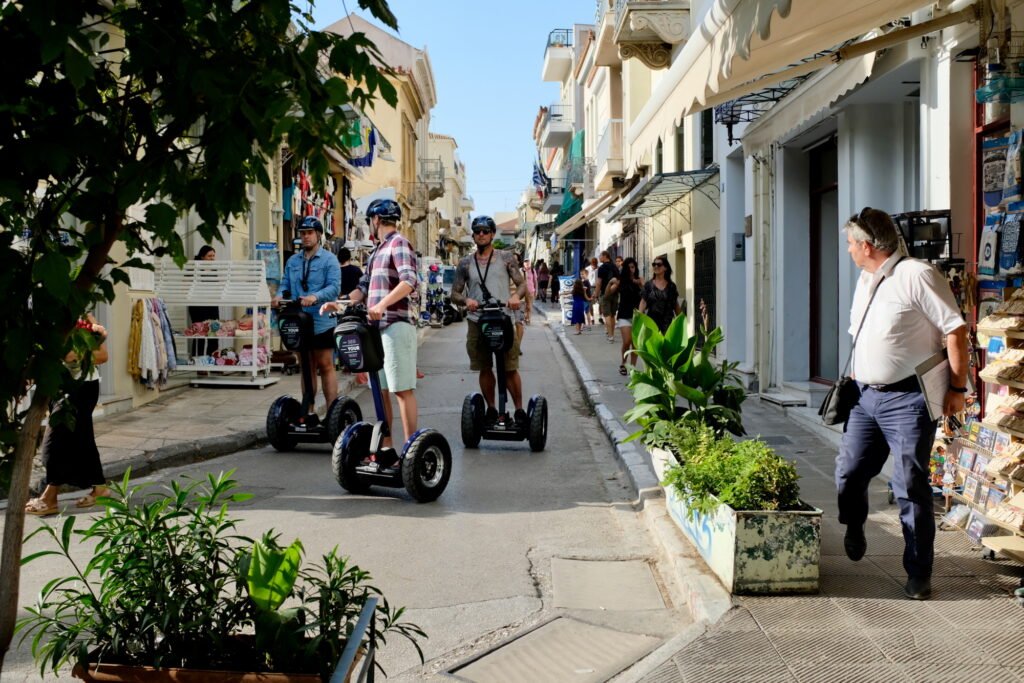
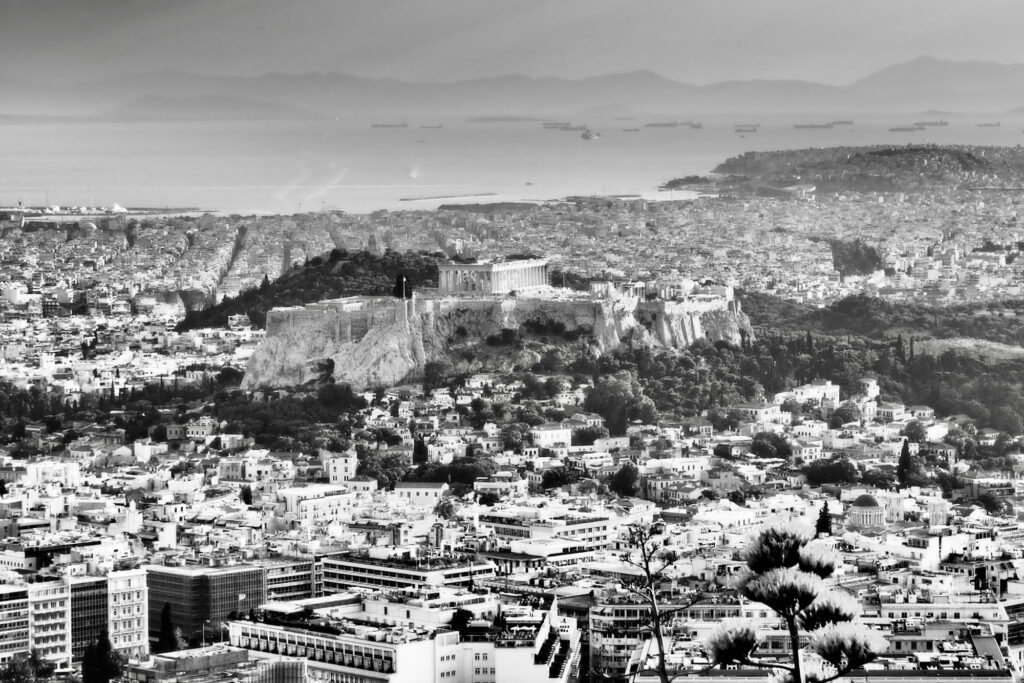
Interested in exploring the silent, weathered lanes of Athen’s hidden Cycladic sanctuary, Anafiotika, where the streets have no name? To reach it, you must first navigate the frantic energy of Athens’ oldest neighborhood, the Plaka. Clambering up the steep, stepped corridor of Mnisikleous Street, your senses are filled with the clatter of porcelain espresso cups, the animated chatter of outdoor cafes, and the heavy pulse of modern tourism. But if you keep climbing, pushing past the souvenir shops of the bustling Plaka and moving toward the monolithic base of the Acropolis, the noise drops away like a falling curtain of quiet. When you first arrive you may be struck by the intensity of the stillness and silence, finding it odd given that about half of the dwellings are still occupied. Here, tucked completely out of sight, lies a silent, crumbling village of whitewashed stone and nameless alleys. Built hastily and illegally overnight in the 1840s by migrant stonemasons, Anafiotika stands today as a living monument to transience and beautiful decay—a quiet sanctuary that locals and travel guides refer to as the neighborhood of the gods because it sits at the base of the Acropolis.
The Texture of Silence: Wabi-Sabi in the Nameless Alleys
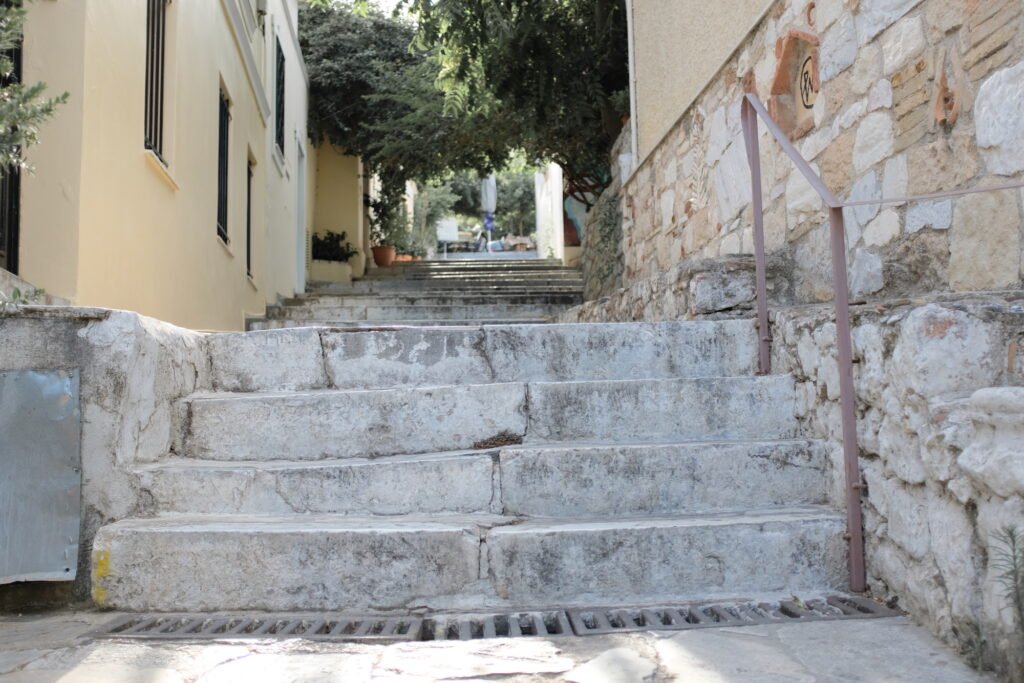
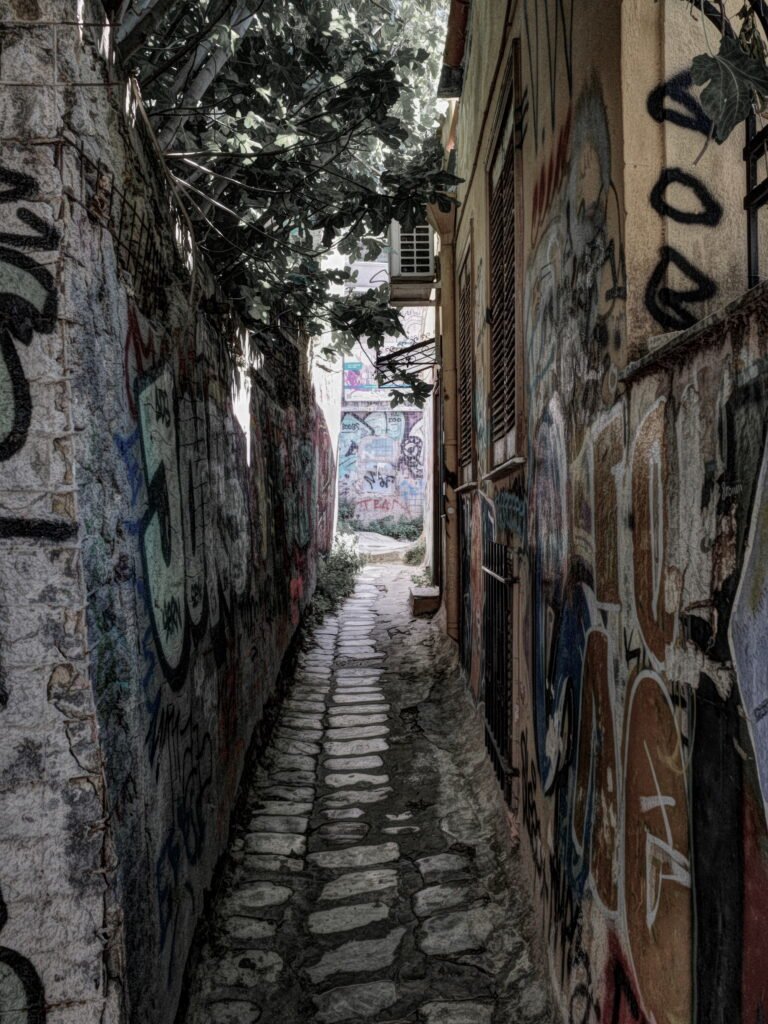
Stepping into the heart of Anafiotika feels like stepping through a portal. The neighborhood completely rejects the straight lines and planned symmetry of modern urban design. Instead, its main alleyways twist and turn organically, conforming entirely to the rugged topography of the Acropolis hillside. Exploring the village with a small and discreet camera such as the Ricoh GR IV felt perfectly matched to the environment: tiny, unassuming, and ready to capture the quiet fragments of a scene without demanding attention.
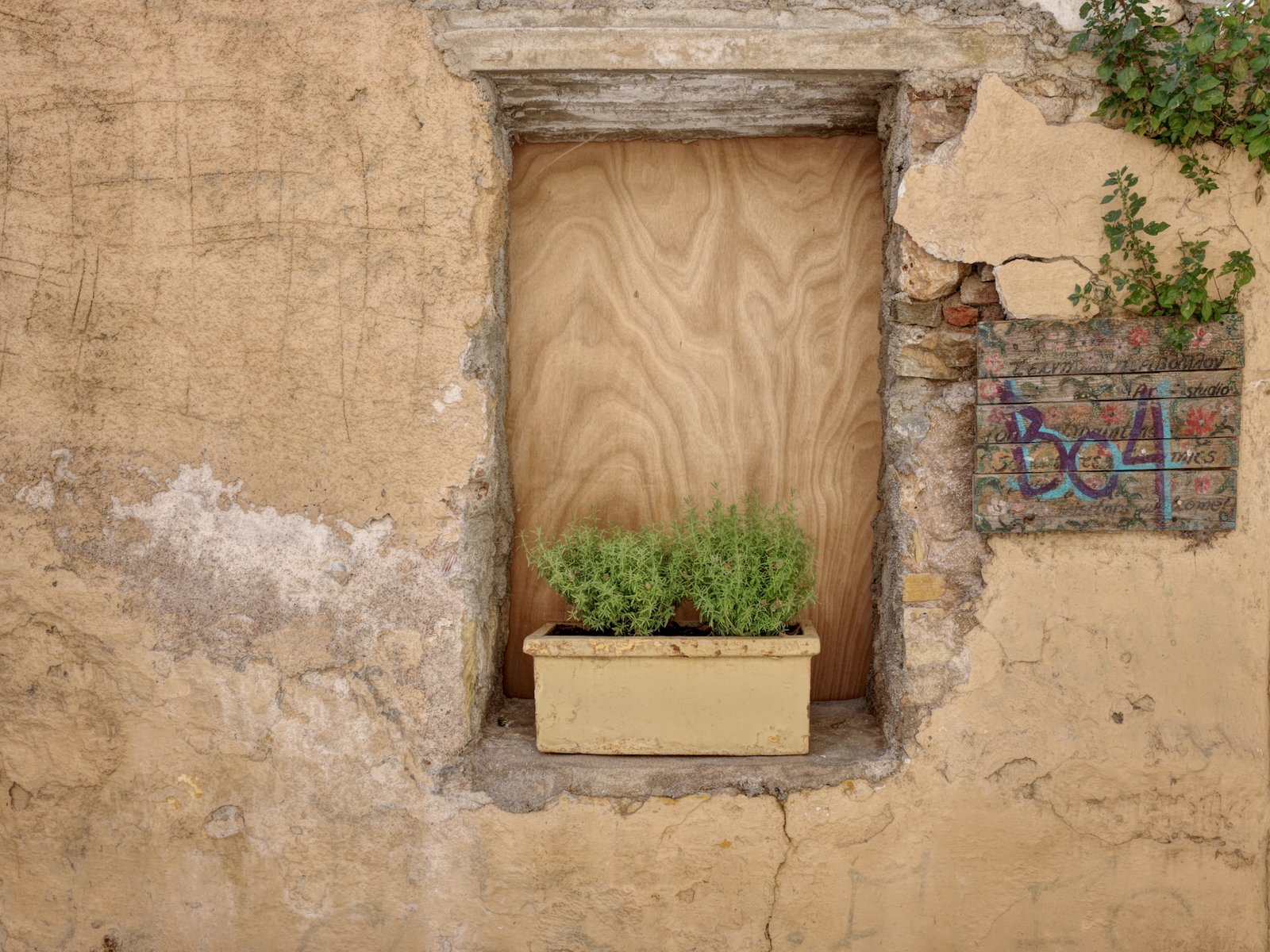
In Anafiotika the wabi-sabi philosophy isn’t an abstract concept; it is etched into every surface. The whitewash on the stone walls isn’t pristine; it is layered, flaking, and stained by years of Mediterranean sunshine and rain. Terracotta roof tiles are cracked and patched with mortar, wooden doors have buckled slightly under the intense summer heat, and iron door handles wear a rich, textured patina of rust. Looking down the narrow side alleys—some so tight that your shoulders can graze the walls on either side—you see a profound, melancholic beauty in how the village accepts its age. There is no attempt to sanitize or restore the decay. In these quiet alleys, the fleeting nature of time is laid completely bare, offering a striking counterpoint to the immortalized, pristine marble monuments standing just a few hundred feet above.
Guardians of the Acropolis: The Cats of Anafiotika
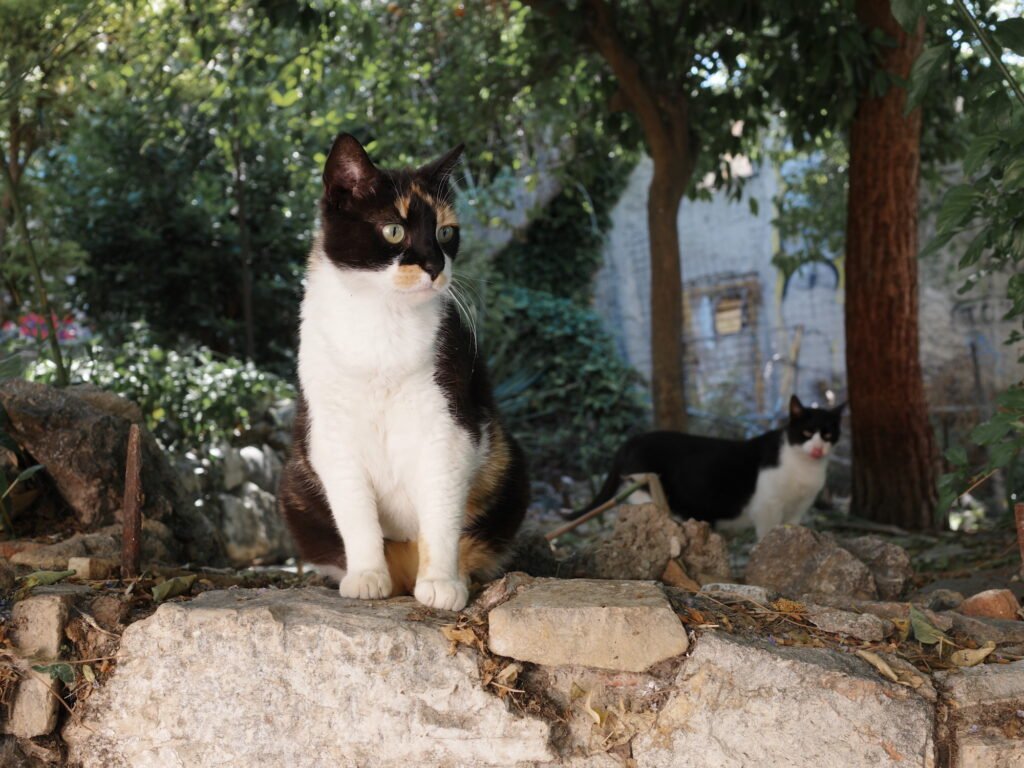
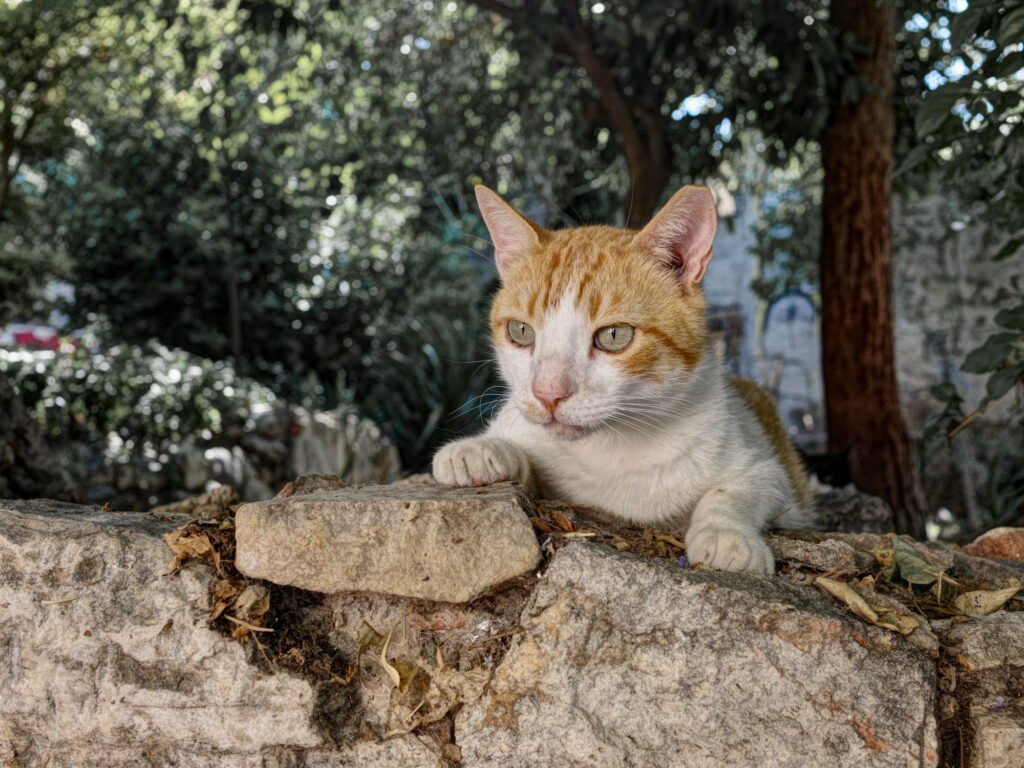
No exploration of these weathered alleys is complete without encountering the neighborhood’s most permanent residents: the community cats of Anafiotika. They can be seen lounging on sun-warmed stone steps, balancing effortlessly on top of crumbling stone walls, and napping under trees or in recessed window sills. In many ways, these animals are the living embodiments of the location’s slow, mindful energy. They do not rush, and they are completely calm. They exist entirely in the present moment, watching the occasional traveler pass by with a gaze of quiet nonchalance. Against the backdrop of peeling paint and ancient stone, these local felines add a layer of gentle vitality to the melancholic atmosphere, showing that life always finds a way to comfortably inhabit the spaces left behind by time.
The Layers of the Present: Graffiti and the Modern Paradox
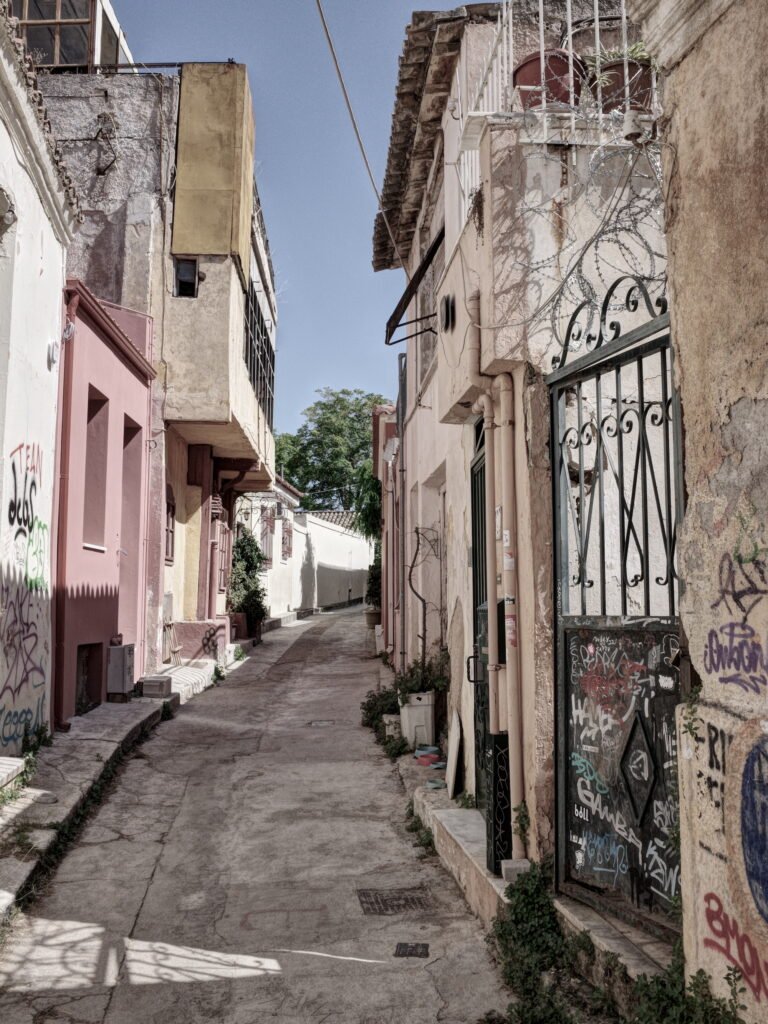
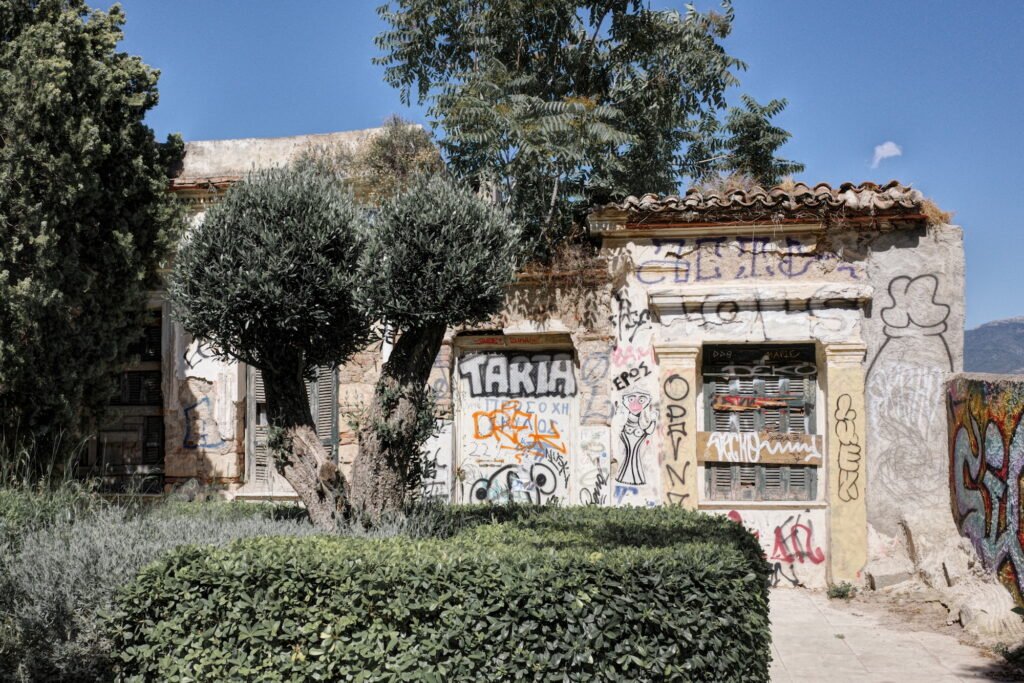
As you move through the lower perimeter of Anafiotika, the quiet harmony of whitewashed stone abruptly collides with a loud, chaotic reality: graffiti. Vibrant spray-painted tags, sprawling political slogans, and modern street art slash across decades-old plaster and hand-carved stone walls. For many visitors, this visual intrusion feels like a jarring desecration of an otherwise historic sanctuary. It reflects a wider, deeply entrenched graffiti problem that impacts nearly every neighborhood in Athens. The city’s economic struggles and intense sociopolitical climate over the last two decades have turned its walls into a massive, unfiltered canvas for public expression, leaving municipal authorities locked in a perpetual and costly battle against vandalism.
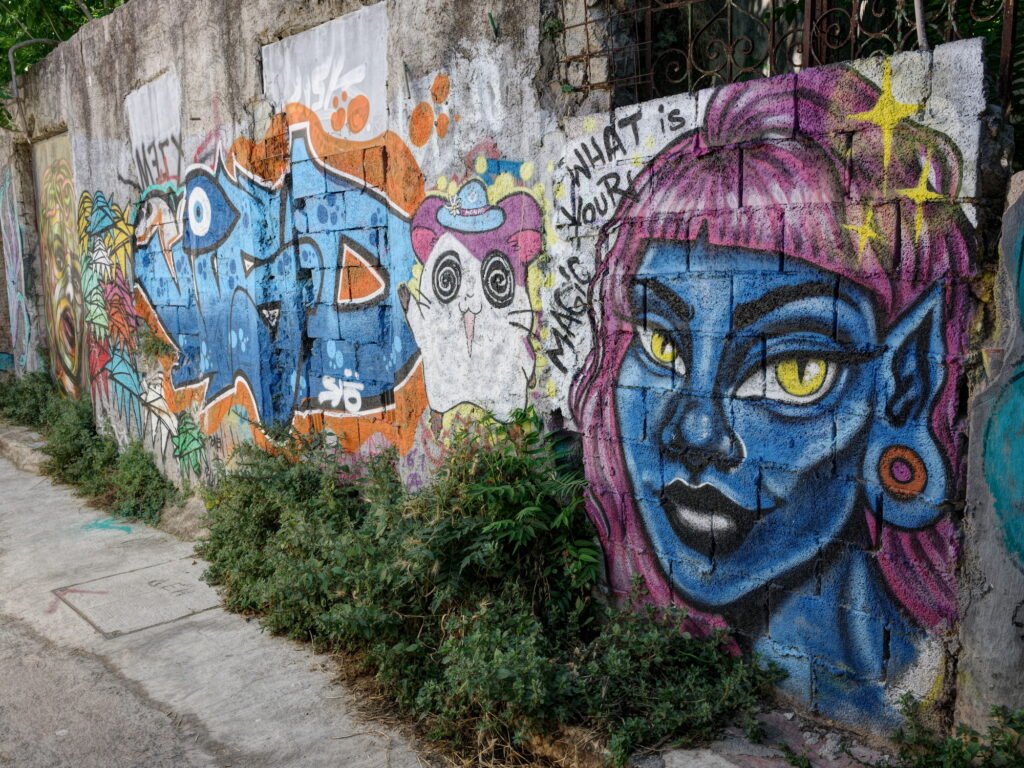
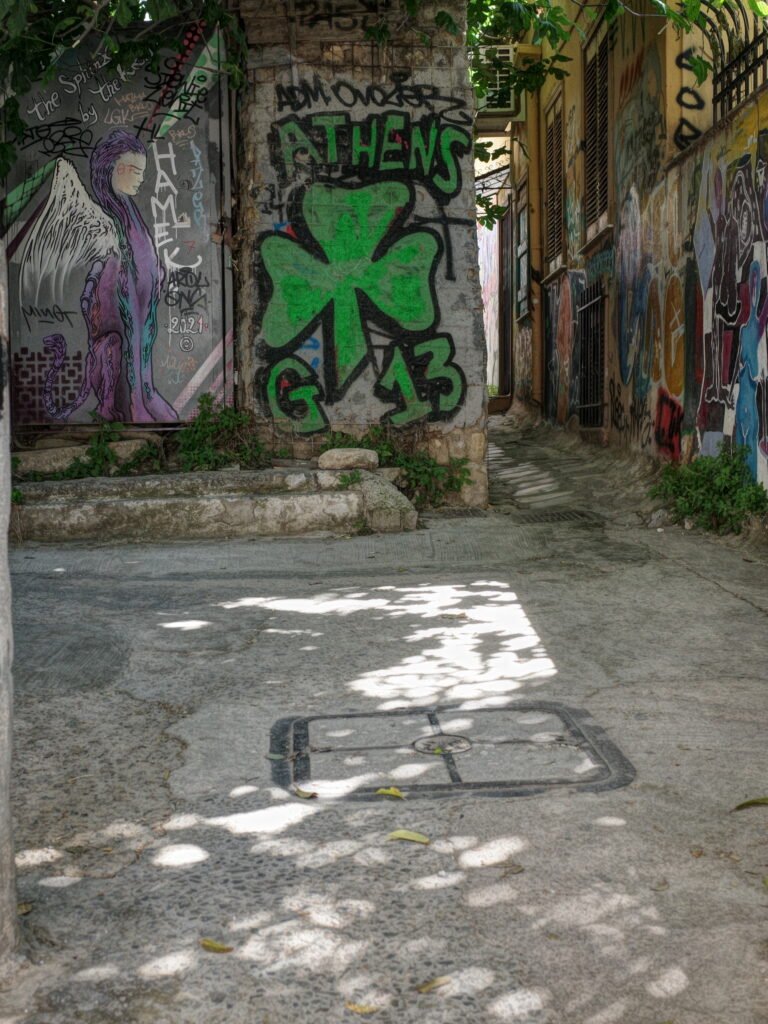
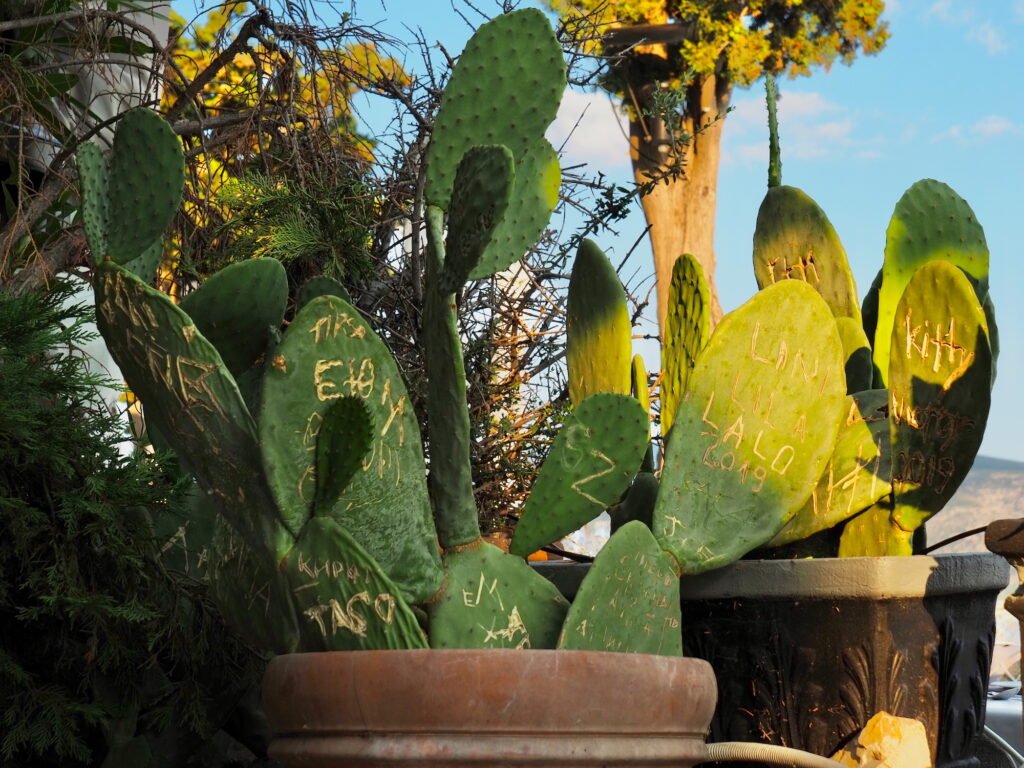
Yet, when viewed through a more patient, mindful lens, the graffiti introduces a complex philosophical layer to the landscape. Wabi-Sabi is rooted in the concept of transience—the understanding that nothing is finished, nothing is perfect, and nothing lasts. In a city that has been continuously inhabited for thousands of years, these modern spray-painted markings are simply the latest, most volatile layer of human history. They represent a raw, immediate tension between preservation and evolution. Documenting these heavily tagged walls with your camera captures a unique urban entropy: a space where ancient foundations, 19th-century island architecture, and 21st-century street culture are compressed into a single, complicated frame. It may not be conventional beauty, but it is an undeniably honest record of a city that refuses to be frozen in time.
Embracing the Fleeting Frame
Ultimately, Anafiotika is a masterclass in the art of letting go. In a world that often demands flawless restoration and curated symmetry, this quiet village under the Acropolis stands as a beautiful testament to the philosophy of wabi-sabi. It is a place where the pristine and the ruined, the historic and the modern, the human and the untamed all coexist in a delicate, fleeting balance. Documenting its lanes with a single subtle camera like the Ricoh GR IV forces a photographer to drop the urge to control and manage the scene. By accepting the harsh Mediterranean light, the imperfections of the flaking plaster, the quiet grace of the local cats, and even the abrasive scars of modern graffiti, we practice a visual form of acceptance. Anafiotika reminds us that the truest beauty is never permanent, never perfect, and never finished—it is simply found in the discipline of looking closely at the world, exactly as it unfolds before us.
Visit our Resources collection more information on a mindful and minimalist approach to photography.
Leave a Reply